Club Night Report
Wednesday 9th September 2026
Club Night Photos for Wednesday 9th September 2026 - Guest Demonstrator: Stewart Furini
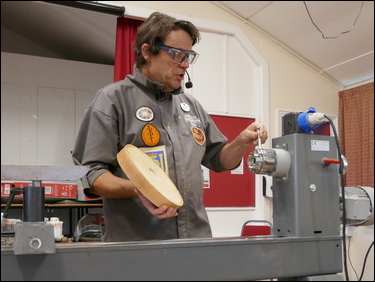
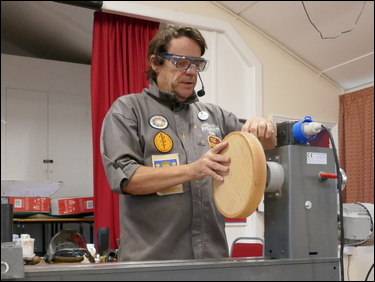
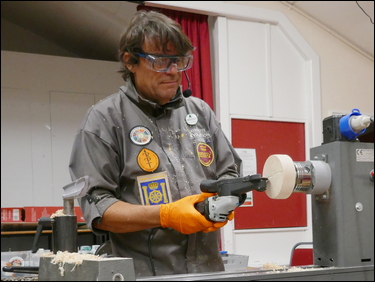
The demonstrator for the September 2026 meeting was the welcome return of Stewart Furini (see website: www.stewartfuriniwoodturning.co.uk ), who last entertained us in October 2024.Stewart announced that tonight's demonstration would concentrate on Texturing and Colouring.
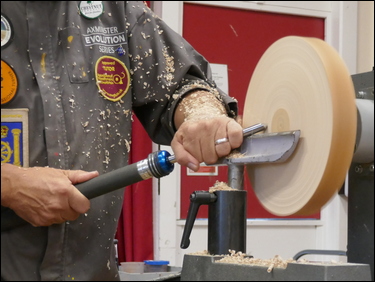
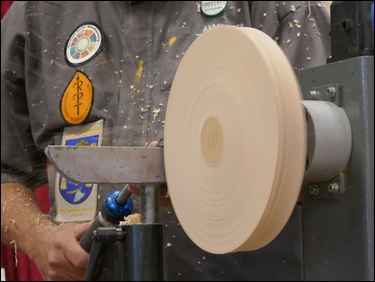
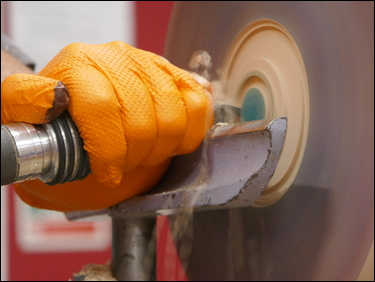
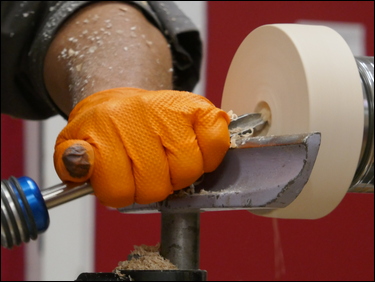
He started by mounting a large beech blank via a pre-prepared recess onto a 4-jaw chuck - and proceeded to clean up the front face and the outside diameter. The front face was smoothed with a large scraper.
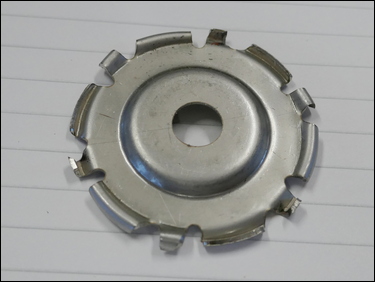
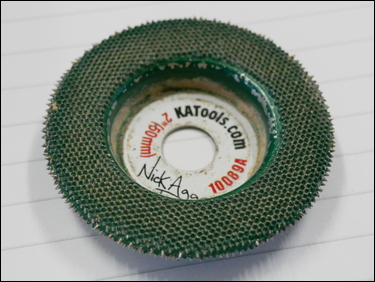
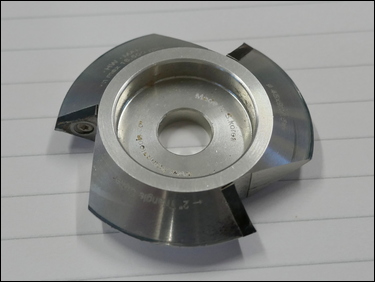
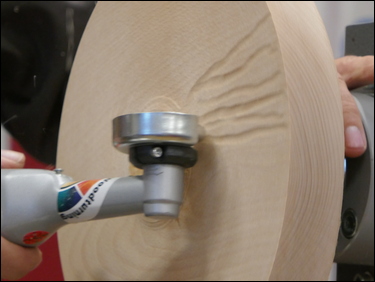
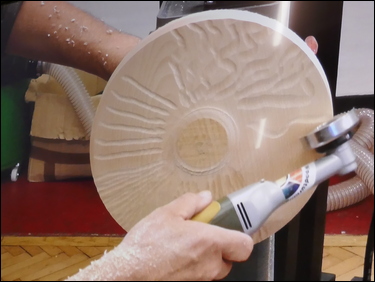
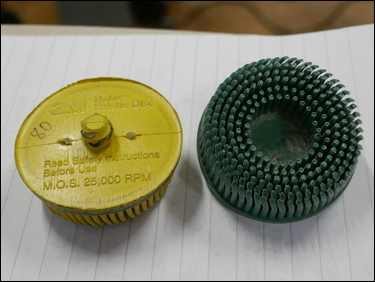
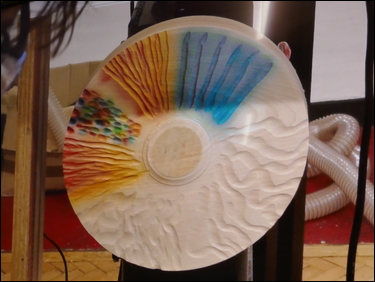
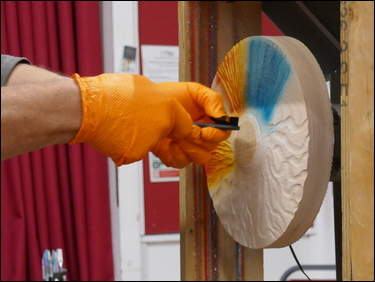
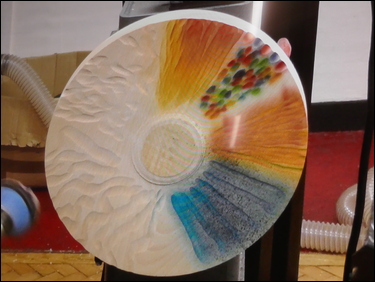
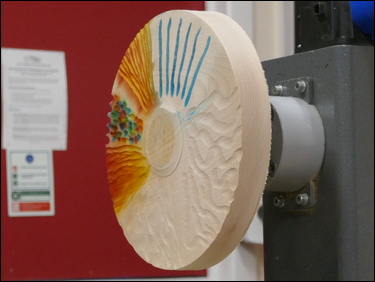
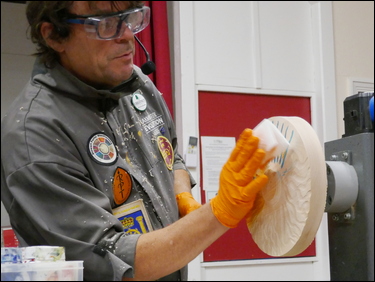
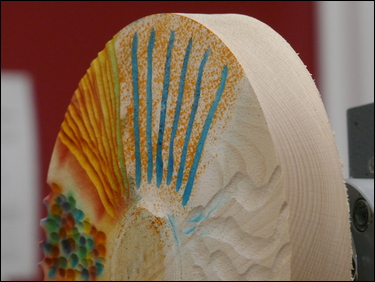
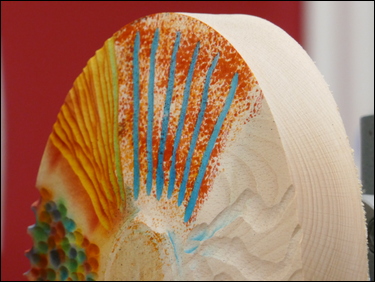
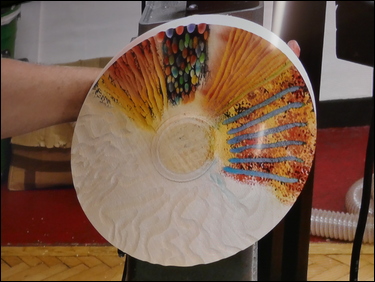
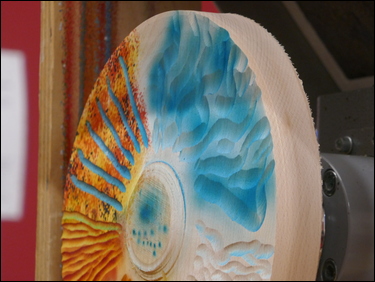
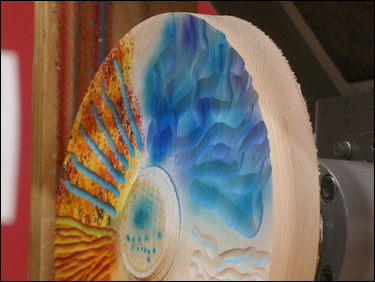
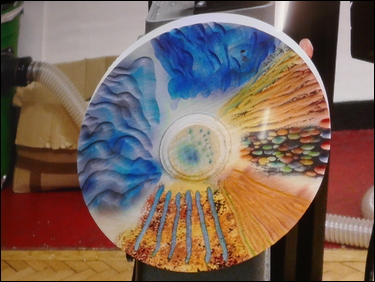
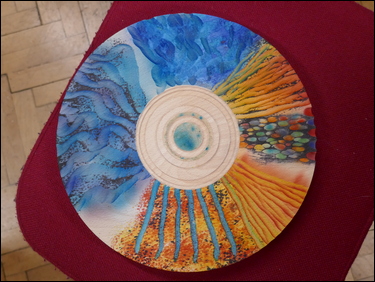
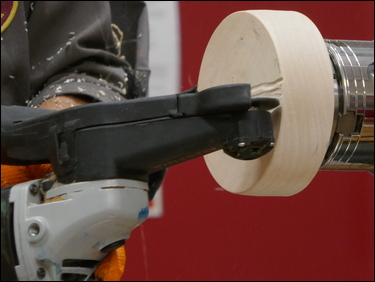
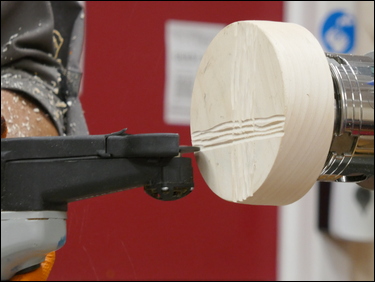
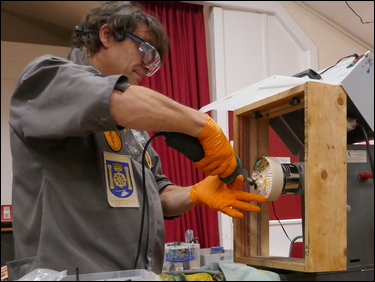
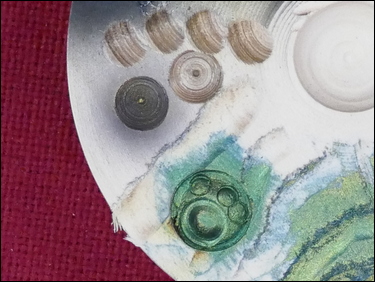
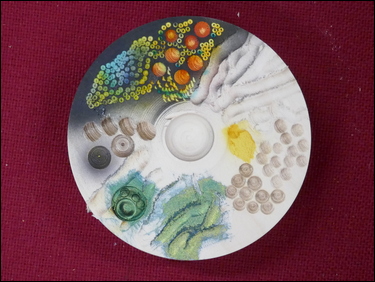
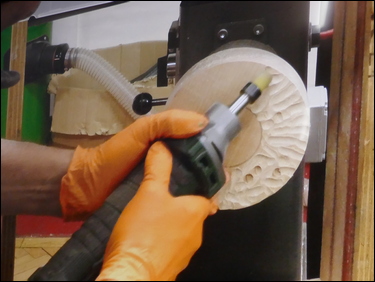
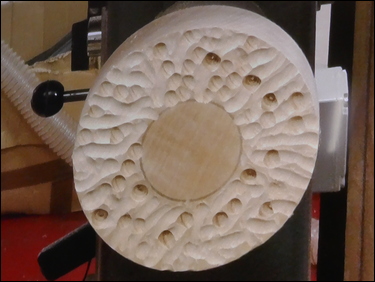
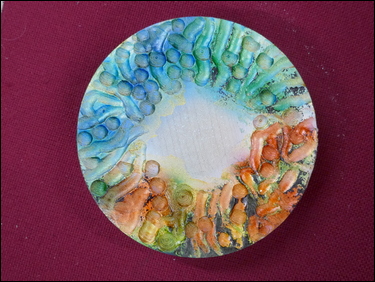
A Proxxon Long-Neck Angle Grinder was the first tool Stewart used to show a variety of cuts on the face of the blank. The Proxxon can be fitted with a number of different cutters ranging from an Arbortech type cutter, rasps and cutters with carbide tips. Stewart textured the entire face of the part with gentle freehand cuts - stating "let the speed do the cutting" - straight cuts that ran off the edge of the blank, stopped cuts, edge cuts, waves and curved cuts were all applied to the stationary blank - a total of six different areas of texture. A 3M Roloc Bristle Disk was used to 'de-fuzz'/ 'sand' the textured surface.
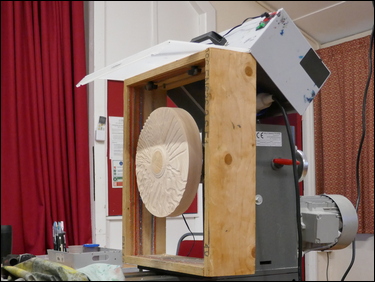
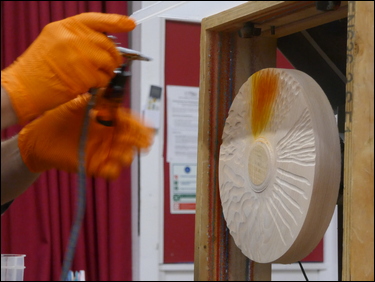
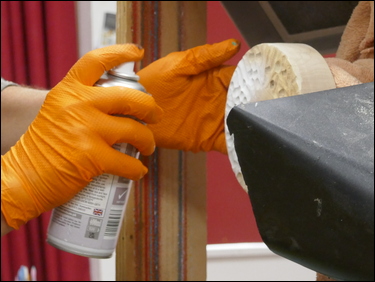
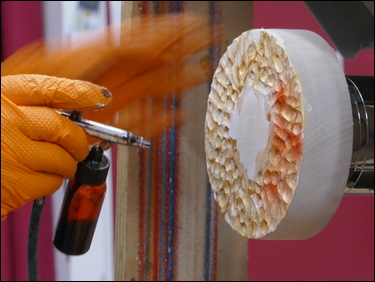
Stewart recommended that you protect yourself - hands and eyes, and use a vapour rated mask (not a dust mask) when using air-brushes/ spray painting - also, protect your lathe and the floor against over-spray. He mounted his portable fume extractor hood on the lathe bed - a much modified commercial unit. Different colours of spirit stains were used to colour the texturing - for example - starting with yellow - then followed by orange, blue, yellow and orange to build the effect. Spraying from the side (rather than straight on) produced a two-tone effect. A tooth-brush was use to flick paint specks onto the texture. A crumpled paper towel was used for a 'dabbing' effect. Each of the textured areas had a different colouring technique applied to them. Stewart specified that the texture/ colour should be 'framed' in the centre - for example - prior to hollowing - by creating a raised wall with a parting tool to ensure a crisp edge.
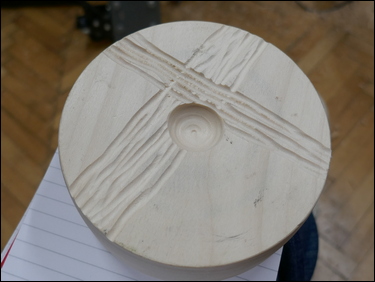
A new blank was mounted on the lathe and an Arbortech (a much heavier duty tool than the Proxxon) was used to texture the face with a number of parallel cuts - then rotated 90 degrees and more parallel cuts added.
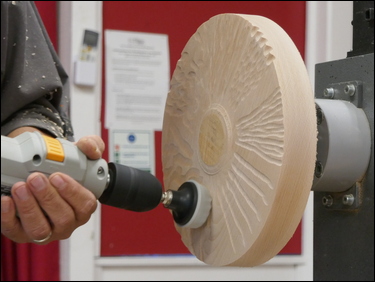
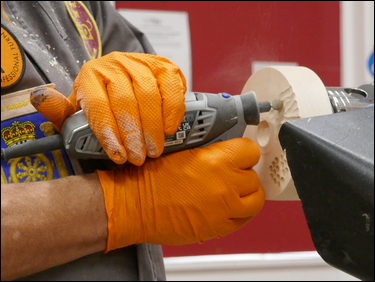
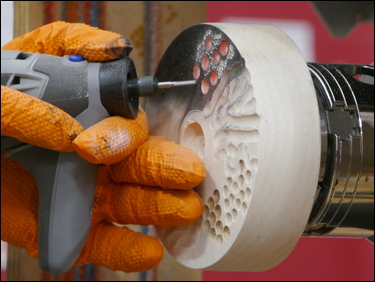
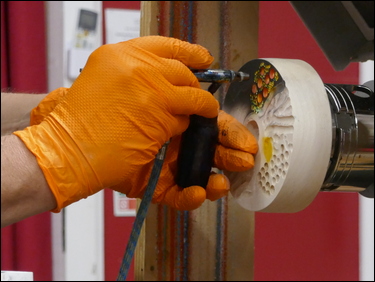
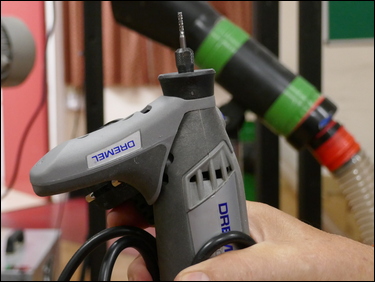
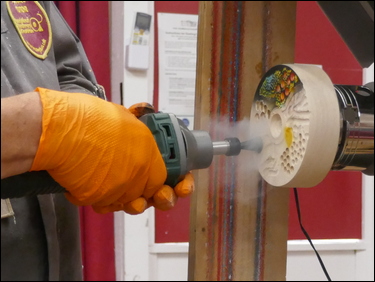
A Dremel is a popular and readily available tool. When paired with the 'Detailers Grip Accessory' - it becomes very manageable and comfortable to use. It can be used to produce similar textures to the Proxxon. Multiple different cutters can be used to refine a texture - before and after colouring. Once again, different colouring techniques were shown.
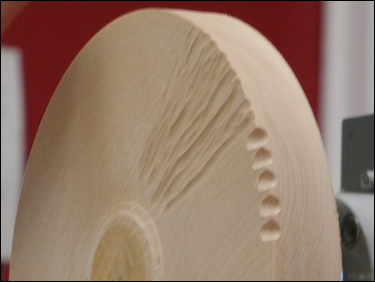
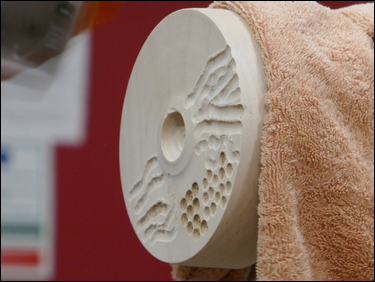
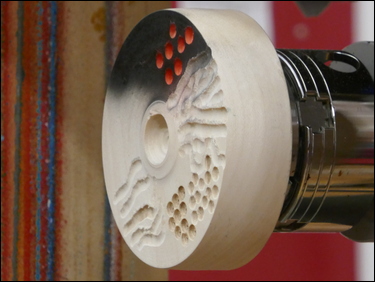
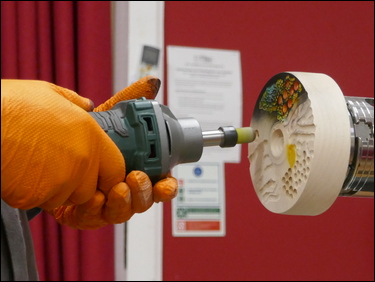
A die grinder (a much heavier duty tool than the Dremel) was the next tool that Stewart used. This tool has a ¼" inch collet 'vs' the Dremel's 1/8" inch collet. A sabre-tooth burr was used for some of the texturing. Stewart also demonstrated the use of a 'Manpa Concave Eye Cutter' - which creates very interesting textures - an 'eyes' effect by scorching the timber.
The front face was re-cut to produce a new 'blank canvas.' The die grinder with the sabre-tooth burr was used to texture the entire surface - which was sprayed with ivory lacquer - then decorated with gold brush on paint -dried quickly with a hair dryer (for demonstration purposes) - then had multiple air-brushed stains applied. Stewart said that the final finish to his work is usually acrylic spray lacquer - satin for textured work or gloss for smooth work.
Once again, Stewart delivered a very full evening of fast-moving techniques, hints, tips and audience interaction - delivered with skill, confidence and humour. An excellent evening, with something for everyone.
Thank you, Stewart!
 |
 |
 |
 |
 |
 |
 |
 |
 |
 |
 |
 |
 |
 |
 |
 |
 |
 |
 |
 |
 |
 |
 |
 |
 |
 |
 |
 |
 |
 |
 |
 |
 |
 |
 |
 |
 |
 |
 |
 |
 |
 |
 |
 |
 |
 |
 |
 |
The Display Table had some interesting items on display:
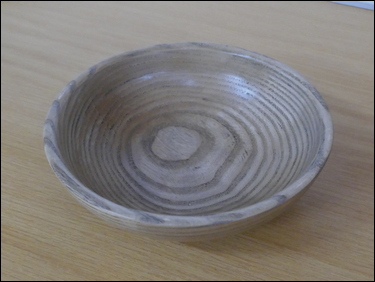
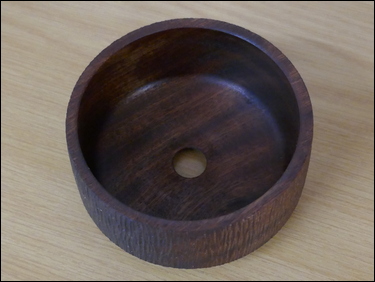
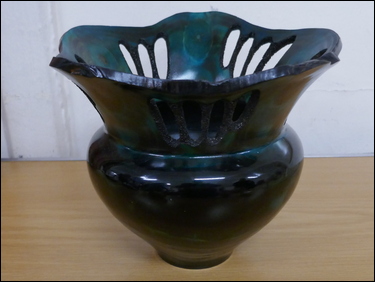
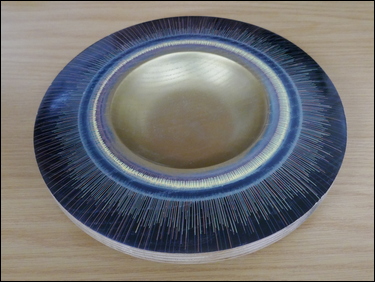
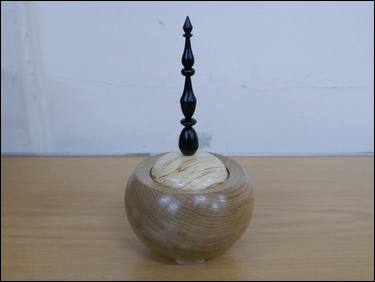
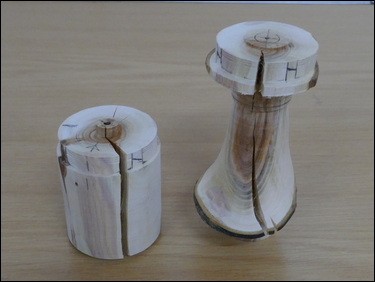
Don Webster presented a small ash bowl finished in embellishing wax and a small semi-enclosed dish made in mahogany and decorated on the outside with a carving tool - unfortunately, during the finishing process it turned into a funnel. Frans Brown showed a large monkey puzzle vase that he described as 'over coloured' - too much blue, to the extent that it had concealed the characteristic monkey puzzle knots. Roger Blake displayed a large ash platter with a wide rim, made in ash. It had been decorated with black acrylic paint then a coat of iridescent blue and white to get a 'spin painted' effect. Dave Branscombe presented a small hollow lidded pot with three carved feet and a tall finial. Graham Furze showed a 'failure' where an intended mushroom box in wet plum timber split - converting it into firewood.There was a theme for the display table - "A Mushroom" - unfortunately, the author failed to capture/ photograph all of the entries…
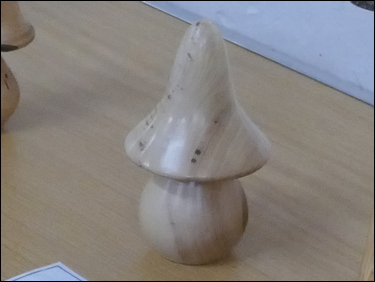
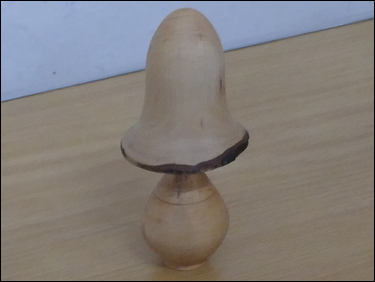
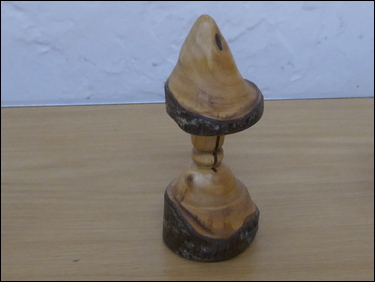
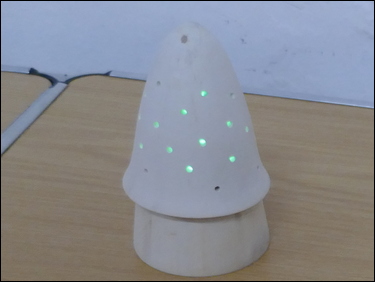
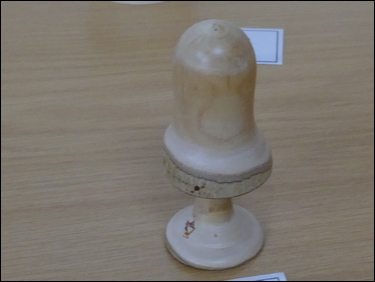
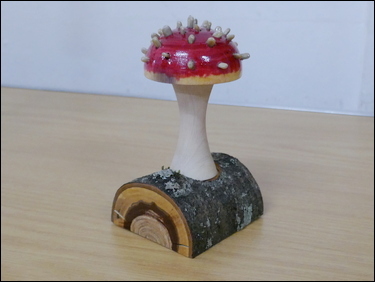
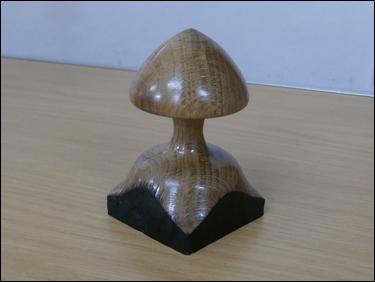
Dave Branscombe submitted a small pot with a fitted lid. Graham Furze also showed a small pot with a fitted lid. Dave Hawes showed a cherry (branch wood) mushroom finished with Danish oil. Martin Barrett displayed a hollow mushroom box with a multi- coloured light inside it. Steve Lloyd displayed a sycamore mushroom with the bark on the cap and the base. John Theobald (Theo) presented a hazel 'poisonous' mushroom with a coloured cap and sunflower seeds inserted into it, mounted on a chunk of damson tree. Dave Newman showed a turned and burnt mushroom on a square base, made in oak.
 |
 |
 |
 |
 |
 |
 |
 |
 |
 |
 |
 |
 |
|