Club Night Report
Wednesday 12th August 2026
Club Night Photos for Wednesday 12th August 2026 - Club Demonstrator: Frans Brown
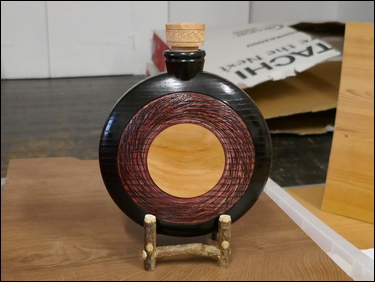
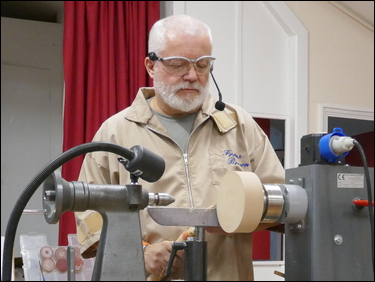
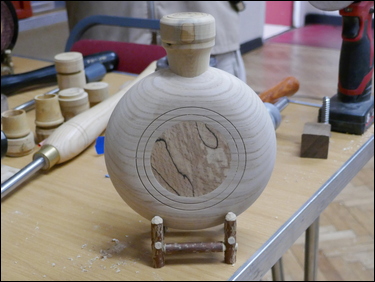
The demonstrator for the August 2026 meeting was the welcome return of our own Frans Brown (see website: www.fransbrown.co.uk ), who last entertained us in July 2025.Frans announced that tonight's demonstration would be the making of a Hip Flask - suitable for holding liquids, with a threaded top.
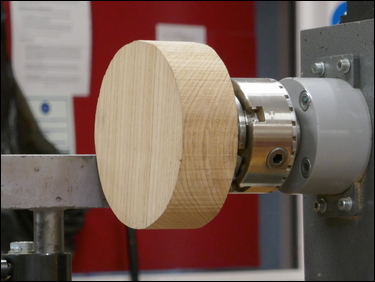
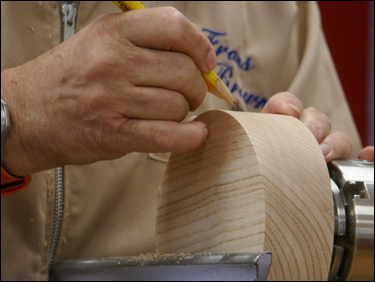
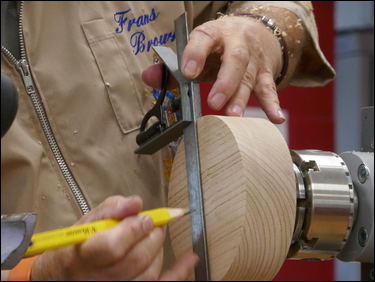
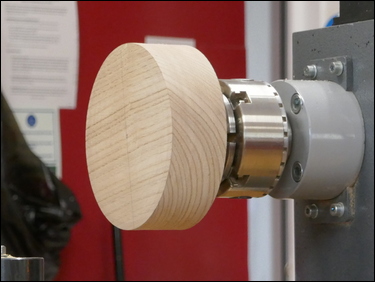
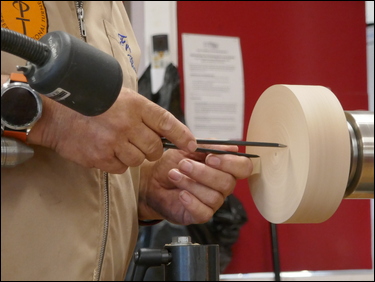
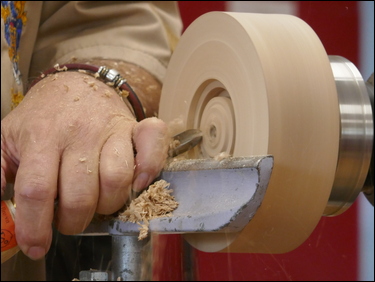
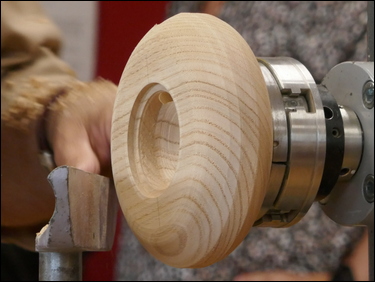
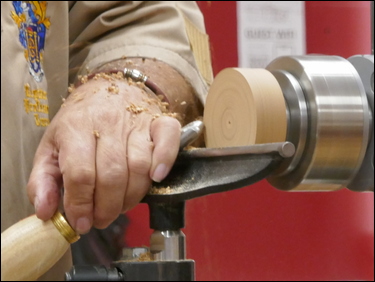
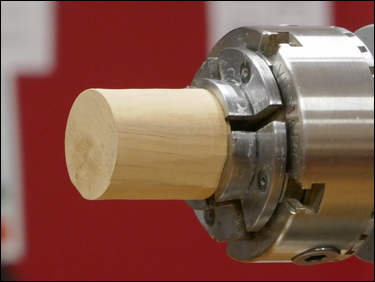
A sweet chestnut blank approx. 6 inches diameter by 2 inches thick was mounted on a screw chuck. The outside diameter was trued - both the front and back faces were cleaned up. Grain direction and orientation were discussed. The blank was rotated to present the grain horizontally - and was then marked out for the position of the stopper - half way in the blank thickness.
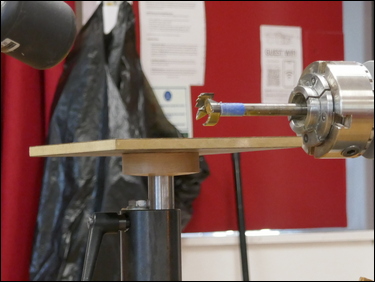
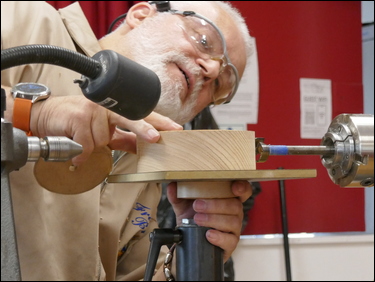
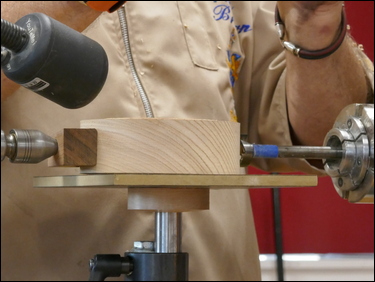
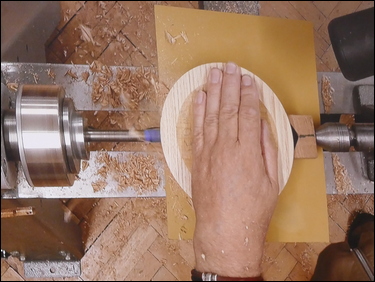
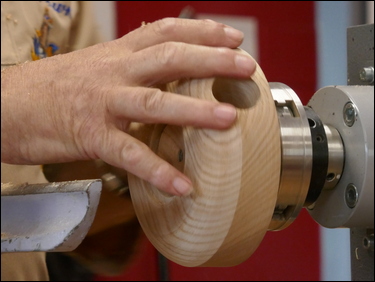
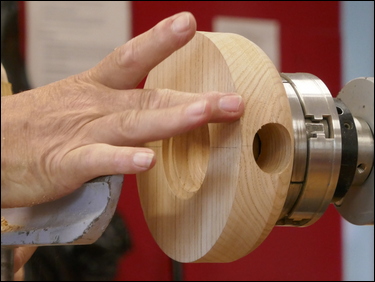
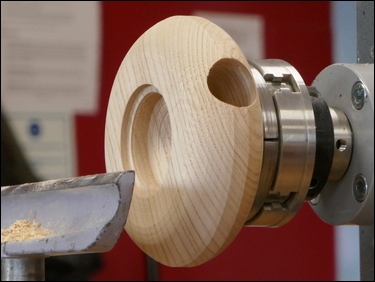
Frans then showed an interesting and safe technique for drilling the (stopper) hole in the side of the blank using a Forstner bit (32 mm diameter) - held in a 4-jaw chuck. A home-made support table was mounted in the banjo and adjusted to get the centre of the stopper position (in the blank) on centre. A 'V-block' shaped piece of wood was placed between the tailstock live centre and the blank to protect it as the tailstock was used to feed the blank onto the Forstner bit.
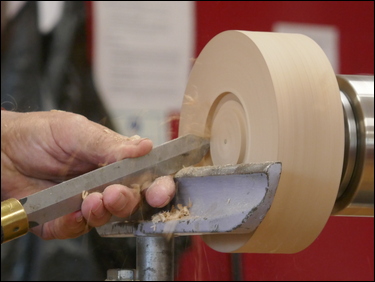
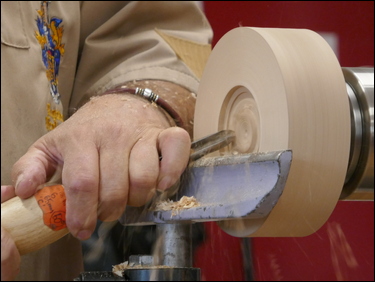
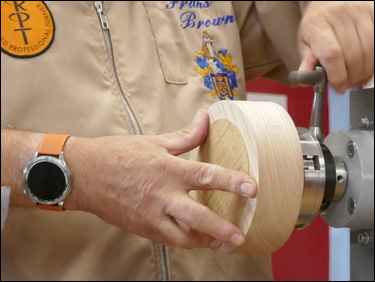
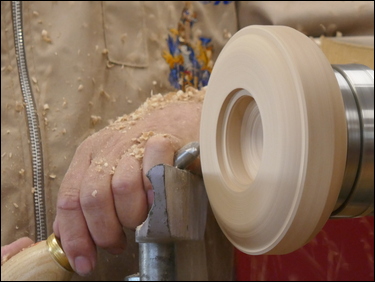
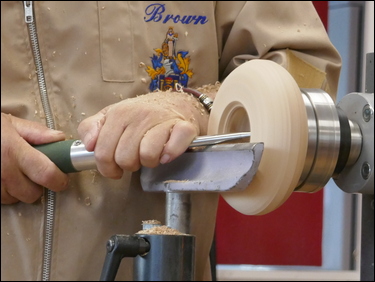
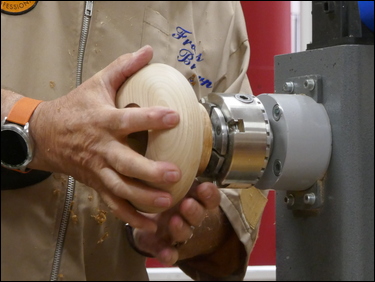
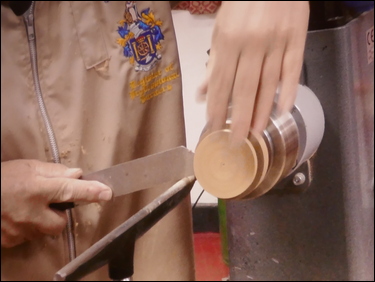
The part was remounted on the screw chuck and marked out to suit a 'C' jaws recess. The recess was cut approx. 5 mm deep - and the hollowing was started. The part was removed from the screw chuck and re-mounted on the 'C' jaw recess. The front face was cleaned up - and once again a 'C' jaws recess was marked out and cut - followed by some initial hollowing. The outside shape was turned from both sides holding on the 'C' jaws recesses - to meet in the centre of the piece.
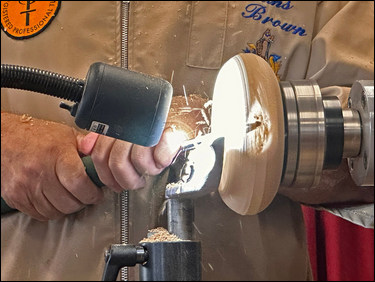
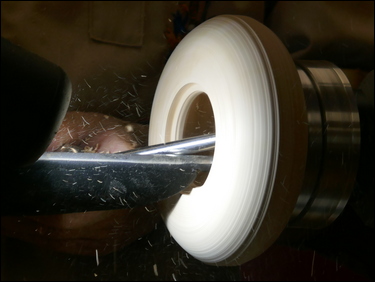
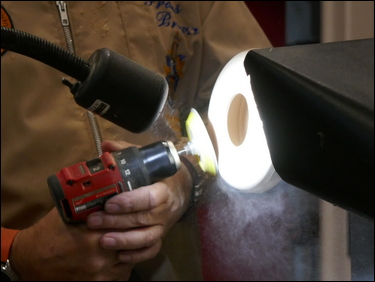
The hollowing of the flask was then completed. Frans showed the technique of locking the chuck to the spindle nose with a grub-screw and then reversing the spindle direction so that he could work on the far side of the lathe centre line. He pointed out that you could actually see the tip of the hollowing tool via the stopper hole - to check your progress. The outside shape was power sanded through the grits to finish.
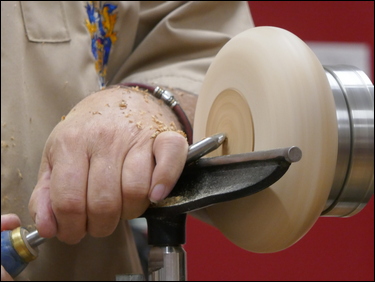
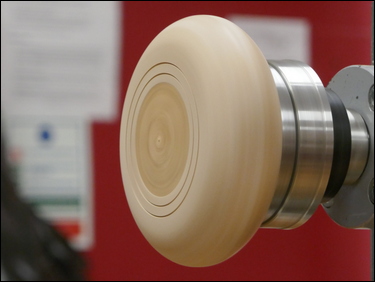
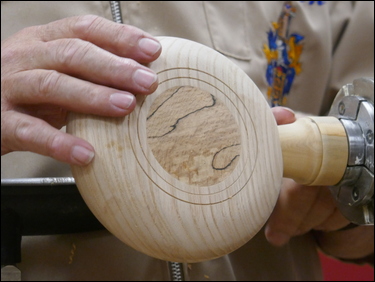
Two inserts would be required for the front and back of the flask. A spalted beech blank approx. 3 inches diameter by 1.5 inches thick was held in a chuck - marked out to suit the recess in the flask and then cut to size. The insert was checked for the correct fit in the flask - and was then parted off. The body was mounted on its 'C' jaws recess - the insert was fitted and faced to blend with the flask body. Some decorative grooves were added with a 3-point tool. The second insert would be made and fitted the same way. Frans specified that if the flask was intended to be used to contain a liquid it must be properly sealed with a food-safe epoxy resin. He suggested this company as a good place to start: https://resin-pro.co.uk/product/transparent-resin-for-food-contact-food-safe-kg-1-35/
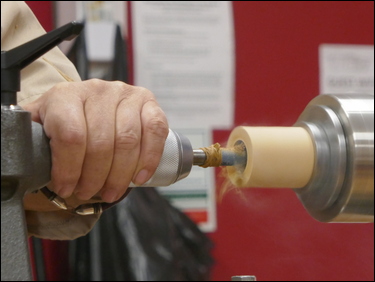
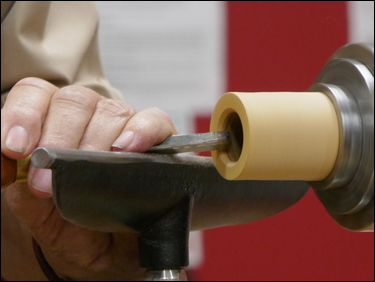
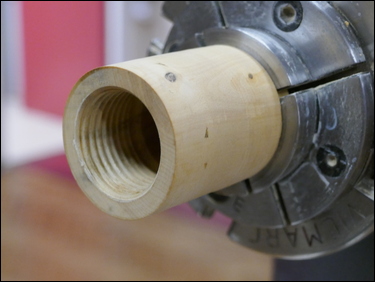
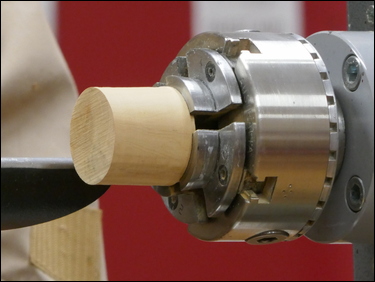
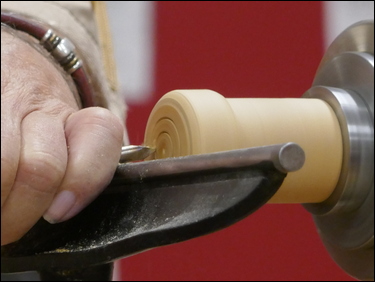
The neck was made from box wood - blank size was approx. 1.5 inches diameter by 3 inches long - held in a 4-jaw chuck. The part was drilled 25 mm diameter through, the front edge of the hole was chamfered and an internal thread was cut via hand chasing.
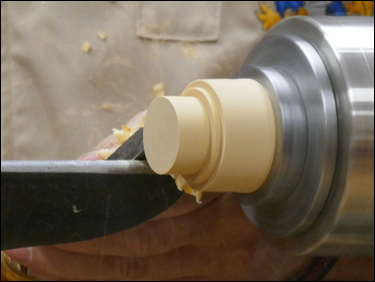
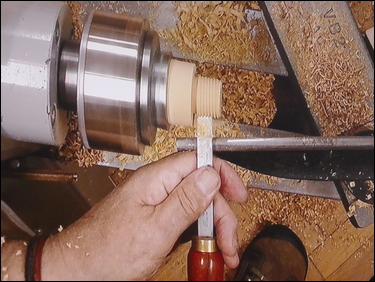
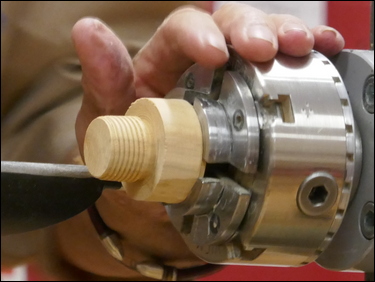
The stopper blank, also box wood was mounted in the 4-jaw chuck and turned to shape. A male thread was cut (and adjusted) on the stopper to suit the thread in the neck section. The neck section was tapered slightly to produce a good fit in the flask body.
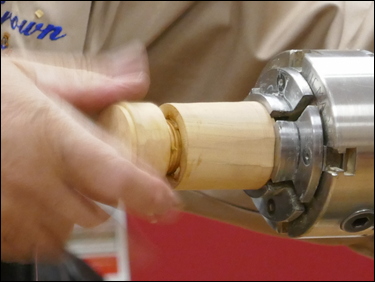
Finally, the stopper was mounted in a spare section of threaded timber - finish shaped and decorated.
Frans specified that he would usually finish the flask with sanding sealer and wax – although, he is also a firm supporter of oiled finishes.
Tonight, Frans presented us with a very different and engaging demonstration - showing some techniques we had not seen before! A wide-ranging display of precise tool control - with plenty of hints and tips along the way.
Thank you, Frans!
 |
 |
 |
 |
 |
 |
 |
 |
 |
 |
 |
 |
 |
 |
 |
 |
 |
 |
 |
 |
 |
 |
 |
 |
 |
 |
 |
 |
 |
 |
 |
 |
 |
 |
 |
 |
 |
 |
 |
 |
 |
 |
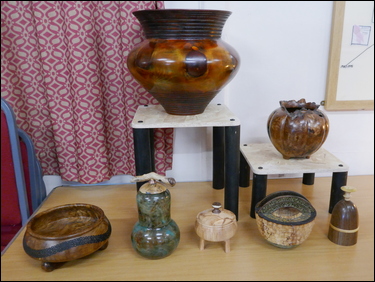
The Display Table showed some interesting items...
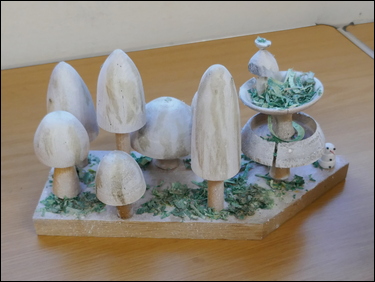
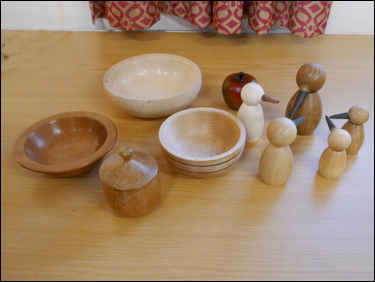
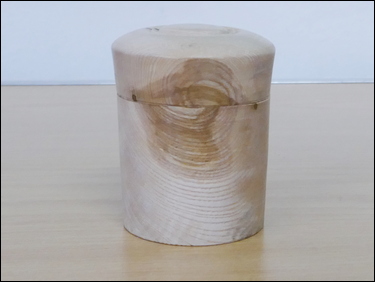
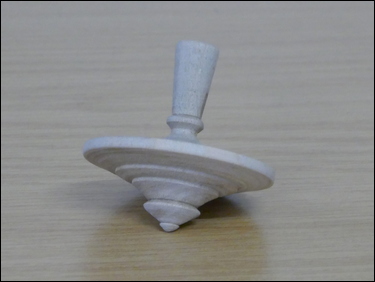
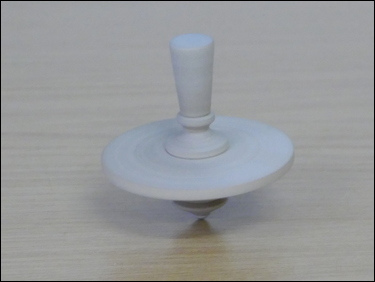
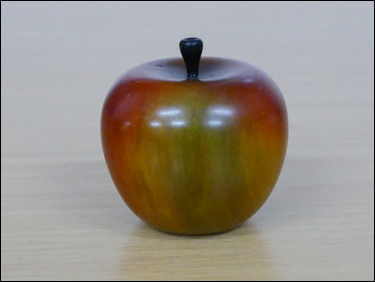
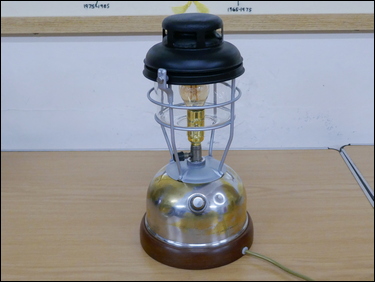
Paul Kohn presented a jewellery box/ stand made from a variety of timbers along with a display of mushrooms/ toadstools mounted on a plinth. Tim Mortimer had had a 'sort out' of some of his early woodturnings, refurbished them (polished?) and presented them for charitable causes. Steve Lloyd showed a thin-wall box, with a close fitting lid, made of ash. Graham Furze had made a small spinning top - 'just for fun' and was surprised at how well it spun! Martin Barrett displayed a small apple he had used to show his daughter, how to use an air brush. Dave Newman showed an antique lamp he had renovated with the addition of electrical fittings and a turned wooden base.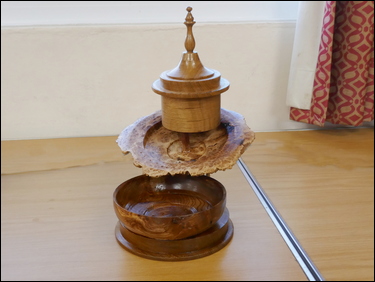 |
 |
 |
 |
 |
 |
 |
 |